Weed Wednesday - Baby’s Breath
Weed Wednesday
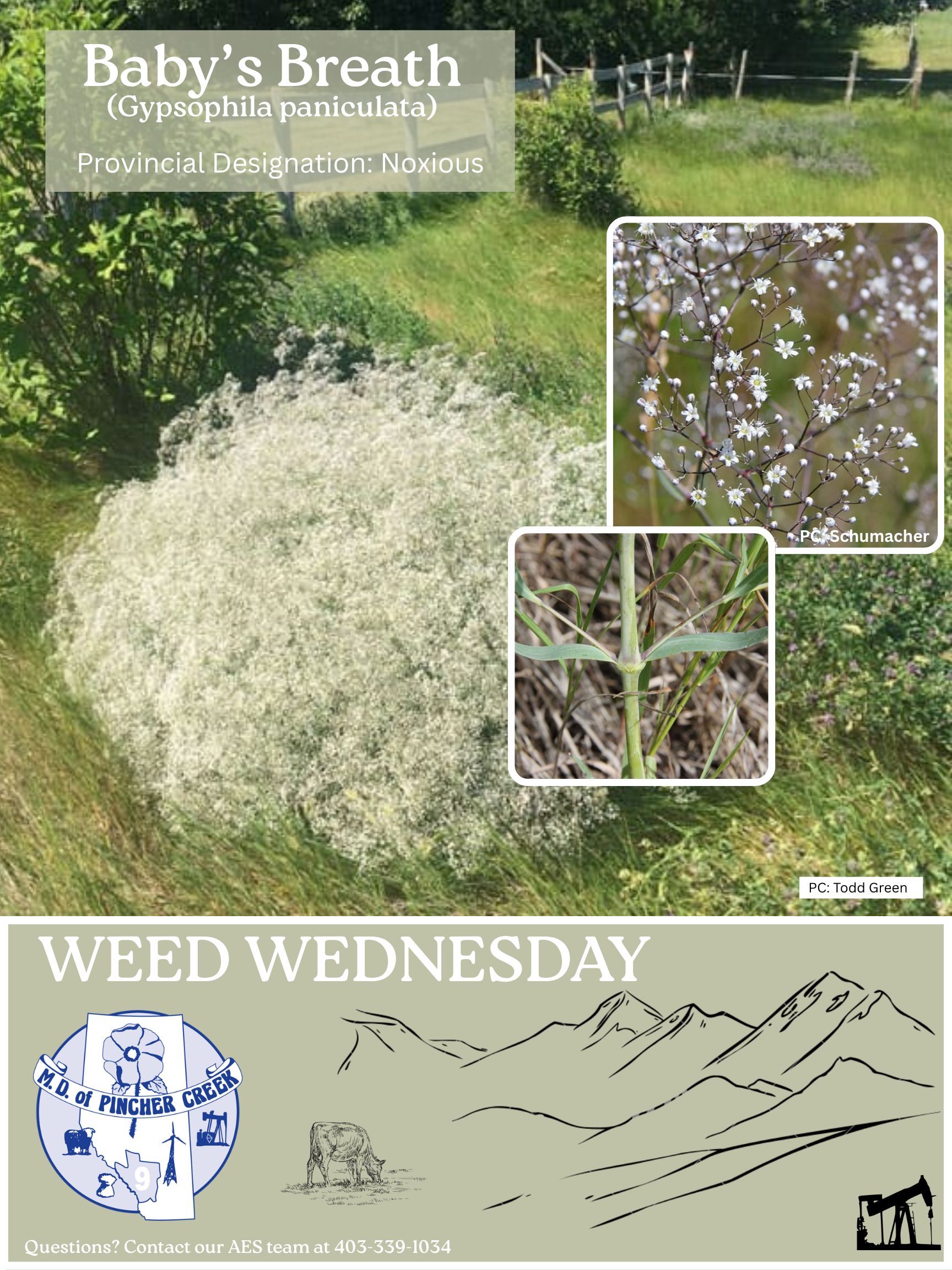
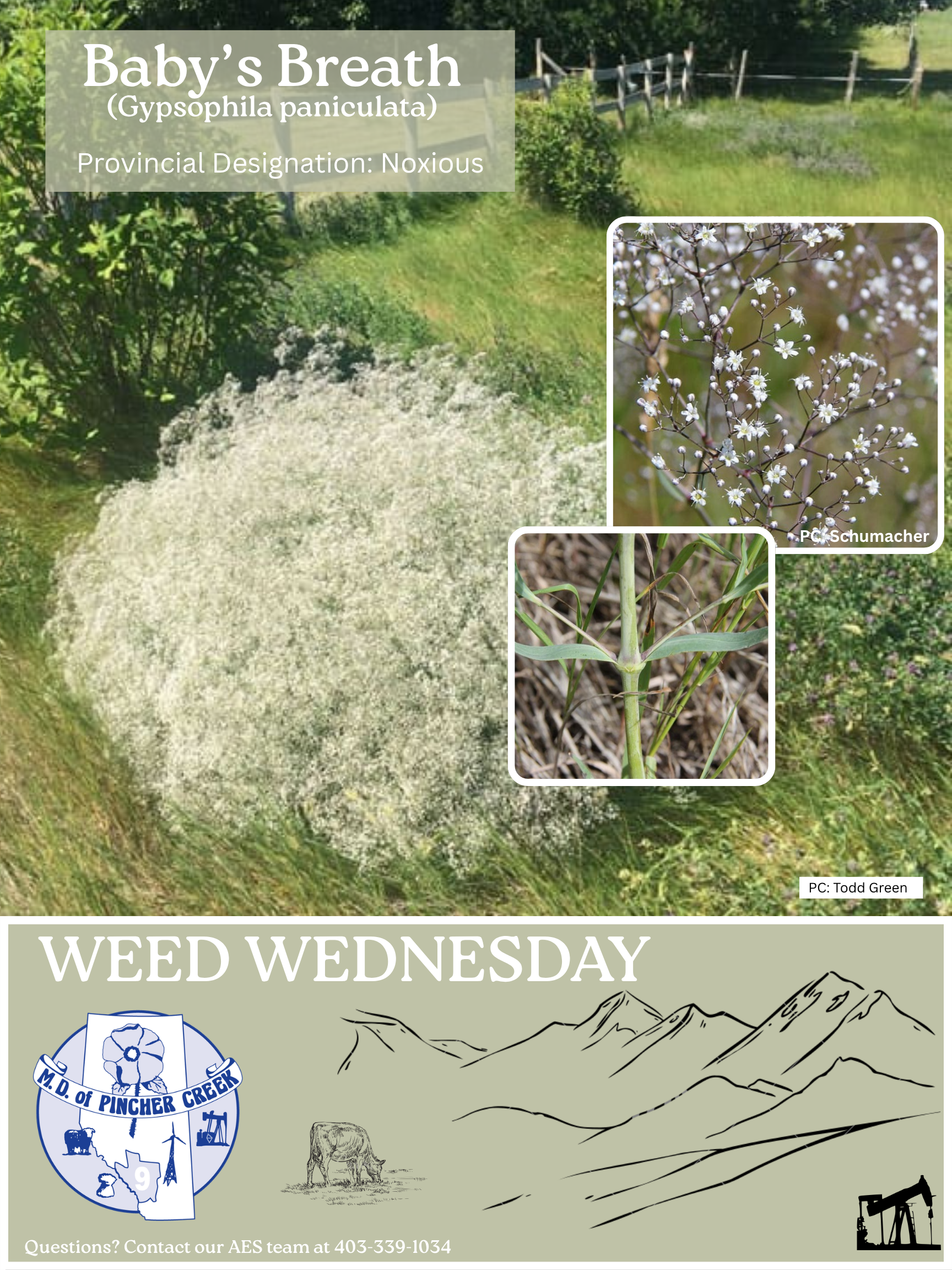
Baby’s Breath: Gypsophila paniculata
Noxious
Baby’s Breath is a perennial native to Eastern Europe and Western Asian and was introduced to Canada as an ornamental. Despite its noxious designation, it is used extensively by the flower industry as a bouquet filler and sold for dry arrangements. It is often used in wildflower mixes- it is important to check the ingredients of all “wildflower” seed mixes before purchasing.
Baby’s Breath grows in fine to coarse soils, requires full sun, and is drought tolerant once established. Stems are erect, blueish green, and can grow up to 1m tall. Leaves are opposite, lance shaped, and can be smooth or slightly hairy, occurring mainly on the upper parts of stems. Flowers are white and have five petals. Numerous flowers are borne on short stalks in highly branched inflorescence. Baby’s Breath reproduces by seed, with a single plant producing 1000’s of seeds. Its stems die off in the winter, and new stems sprout from the root crown each spring.
You can prevent Baby’s Breath from establishing by not growing it, disposing fresh or dried arrangements in landfill bound garbage, purchasing wildflower mixes that do not include it, and purchasing weed free forage. If you love the look of baby’s breath, you can grow the native look-a-like, Pearly Everlasting (Anaphalis margaritacea). You can control Baby’s Breath with extensive cultivation, or by mowing before flowering to prevent seed production. It is difficult to hand pull due to its deep taproot, which must be severed below the root crown. There are no selective herbicides currently registered for use on Baby’s Breath. Consult with our Agricultural Fieldman for more information.
Return to News & Events